If you’ve noticed that your skin no longer heals as quickly, feels thinner, loses elasticity, or seems slower to recover after inflammation, procedures, or sun exposure, you’re not imagining it. Skin repair does change with age — and the reasons are deeply biological, not cosmetic.
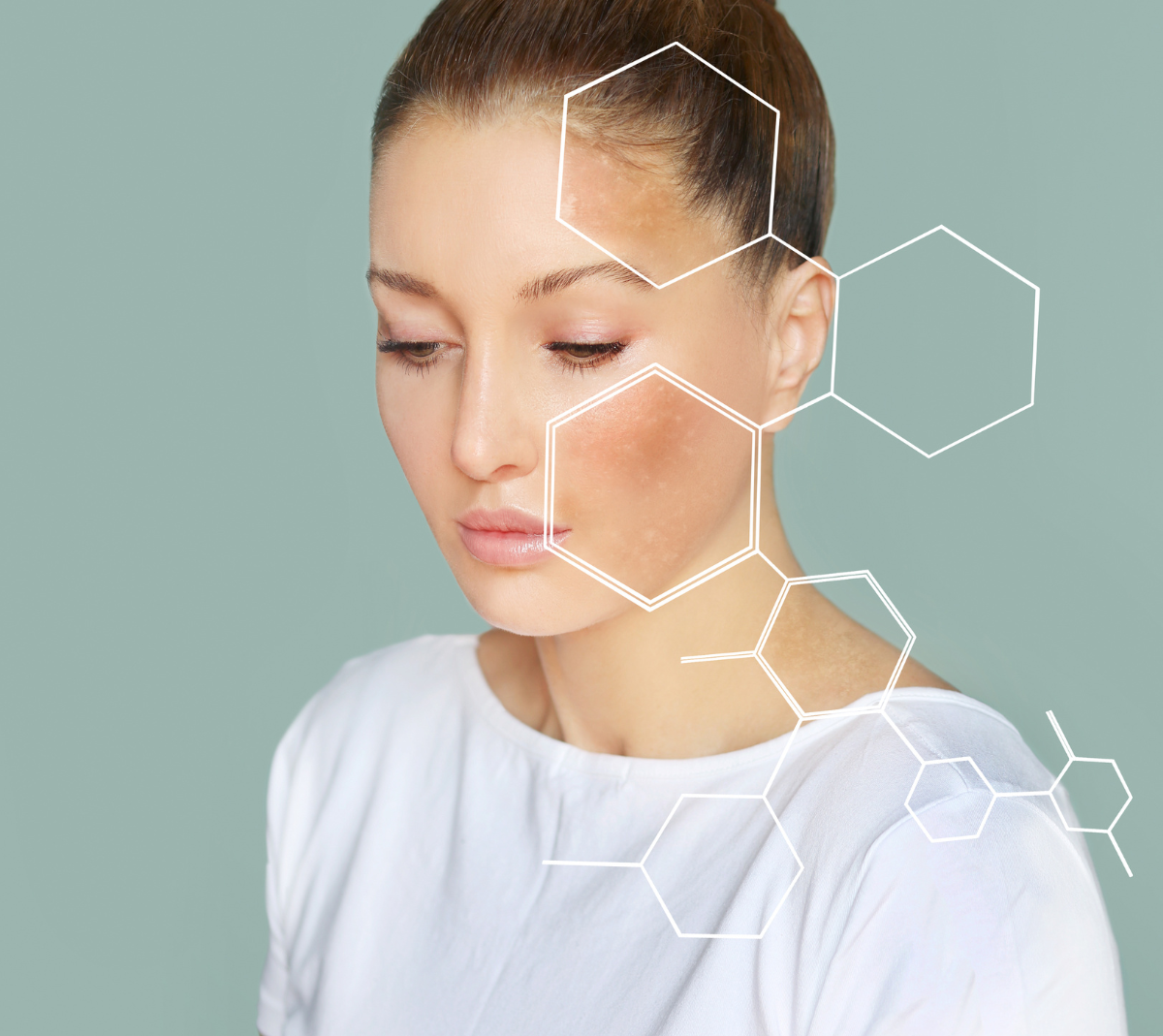
This article explores why skin regeneration slows down over time and introduces GHK-Cu peptide therapy as a medical-grade intervention, used in clinical settings to support skin repair, tissue health, and healthy aging from within. This is not about creams or cosmetic shortcuts — it’s about restoring biological signaling where it matters most.
When Skin Repair Starts to Decline
Healthy skin is not just about appearance. It is an active, self-renewing organ that relies on precise cellular communication to maintain structure, elasticity, and resilience.
In younger skin, repair happens efficiently because the body produces sufficient levels of signaling molecules that regulate:
- Collagen and elastin production
- Cellular turnover
- Inflammation control
- Wound healing
- Blood vessel formation (angiogenesis)
As we age, several changes occur:
- Collagen Production Drops
From our mid-20s onward, collagen synthesis steadily declines. Fibroblasts — the cells responsible for producing collagen and elastin — become less responsive to repair signals.
- Chronic Low-Grade Inflammation Increases
Often referred to as “inflammaging”, this background inflammation interferes with healing and accelerates tissue breakdown.
- Cellular Communication Weakens
The body becomes less effective at sending and receiving repair instructions at the cellular level, even when nutrients are sufficient.
- Slower Recovery From Damage
Cuts, procedures, acne lesions, sun damage, and post-inflammatory marks take longer to resolve — and may heal with poorer quality tissue.
These changes don’t happen overnight, but they accumulate — often becoming noticeable in the late 30s to 50s.
Common Signs Your Skin Repair System Is Slowing
People experiencing impaired skin regeneration may notice:
- Thinner or fragile skin
- Loss of elasticity and firmness
- Slower wound healing
- Persistent redness or irritation
- Increased sensitivity
- More visible fine lines after inflammation
- Uneven skin tone that takes longer to normalize
- Hair thinning linked to scalp tissue health
Topical skincare alone cannot fully address these issues because the root cause lies below the skin surface, at the level of cellular signaling.
Introducing GHK-Cu: A Biological Repair Signal
GHK-Cu (Glycyl-L-Histidyl-L-Lysine Copper) is a naturally occurring peptide found in human plasma, saliva, and urine. In youth, it circulates at higher concentrations and plays a crucial role in tissue repair and regeneration.
With age, GHK-Cu levels decline significantly.
Why This Matters
GHK-Cu is not a cosmetic ingredient — it is a regulatory peptide involved in activating genes linked to repair, growth, and inflammation control.
In medical settings, GHK-Cu peptide therapy is used to help re-stimulate these natural repair pathways under controlled conditions.
What GHK-Cu Does in the Body
- Stimulates Collagen and Elastin Production
GHK-Cu signals fibroblasts to increase synthesis of collagen, elastin, and proteoglycans — essential for skin strength and elasticity.
- Supports Skin Regeneration
It helps normalize cellular turnover, improving overall skin structure and texture over time.
- Accelerates Wound Healing
GHK-Cu has been shown to support faster and higher-quality tissue repair following injury or medical procedures.
- Modulates Inflammation
Rather than suppressing inflammation entirely, GHK-Cu helps regulate inflammatory responses — supporting healing without excessive tissue damage.
- Promotes Healthy Blood Vessel Formation
Improved microcirculation supports oxygen and nutrient delivery to the skin.
- Supports Hair Follicle Health
By improving scalp tissue environment and reducing inflammatory stress, GHK-Cu may support healthier hair follicle function.
Why GHK-Cu Is Not a Skincare Product
GHK-Cu is often misunderstood because it appears in cosmetic marketing. However, medical-grade GHK-Cu peptide therapy is fundamentally different.
| Cosmetic Use | Medical-Grade Therapy |
|---|---|
| Topical, low-dose | Precisely dosed |
| Acts on surface | Works systemically |
| Limited penetration | Targets biological pathways |
| Consumer-directed | Doctor-supervised |
In clinical practice, GHK-Cu is used as a therapeutic peptide, not a beauty product.
The Importance of Clinical Supervision
GHK-Cu influences gene expression, tissue remodeling, and inflammatory pathways. For this reason:
- Dosage matters
- Timing matters
- Individual health status matters
Unsupervised or inappropriate use can lead to unwanted effects, including imbalance in copper metabolism or overstimulation of repair pathways.
At Lyfe Medical Wellness, GHK-Cu therapy is approached with the same clinical rigor applied to other regenerative treatments.
Lyfe’s Medical Approach to Skin Repair Peptides
Rather than treating skin aging as a surface-level issue, Lyfe’s approach focuses on biological optimization.
Step 1: Clinical Assessment
Before initiating therapy, doctors evaluate:
- Skin health history
- Inflammatory markers
- Healing response
- Overall metabolic and hormonal balance
This ensures GHK-Cu therapy is appropriate and safe.
Step 2: Personalized Protocol Design
There is no “one-size-fits-all” peptide dose. Protocols are tailored based on:
- Age
- Skin concerns
- Recovery goals
- Concurrent therapies
Step 3: Controlled Medical Administration
GHK-Cu is administered under medical supervision to ensure:
- Correct dosing
- Proper scheduling
- Close monitoring
Step 4: Integration With Regenerative Therapies
GHK-Cu may be combined with other evidence-based therapies to support:
- Skin quality
- Healing after procedures
- Long-term tissue health
The goal is functional improvement, not cosmetic masking.
Who May Benefit From GHK-Cu Therapy?
GHK-Cu peptide therapy may be considered for individuals who:
- Experience slow skin healing
- Notice accelerated skin thinning or fragility
- Are recovering from medical or aesthetic procedures
- Have chronic inflammatory skin tendencies
- Want to support skin quality as part of healthy aging
- Experience hair thinning related to scalp tissue health
A medical consultation is essential to determine suitability.
Setting Realistic Expectations
GHK-Cu is not an overnight fix.
Skin regeneration is a biological process, and improvements occur gradually as tissue quality improves from within. Most patients notice changes in:
- Skin resilience
- Texture
- Recovery speed
- Overall skin health
The focus is not dramatic cosmetic change, but measurable improvement in skin function and repair capacity.
Skin Aging Is Not Just About Time — It’s About Signaling
As we age, the body doesn’t lose the ability to repair — it loses the signals that tell it how.
GHK-Cu peptide therapy works by helping restore those signals in a controlled, medically supervised way. When used appropriately, it supports the skin’s natural ability to regenerate, heal, and maintain strength over time.
For individuals seeking a medical, science-based approach to skin repair and healthy aging — not cosmetic shortcuts — peptide therapy represents a powerful and evolving area of regenerative medicine.
Contact Information:
- Rawai Clinic : 58/147 Moo 6 T. Rawai, Muang, Phuket, Thailand, 83130
- Laguna Phuket Clinic : 29/99 Moo4, Cherngtalay, Thalang, Phuket 83110
- Phone: +66-94-926-3269 or +66-62-462-3969
- Email: info@lyfemedical.com