For many men, the early 40s come with a frustrating realization: training harder doesn’t lead to the same muscle gains it once did.
You may be lifting consistently, eating enough protein, and following routines that worked well in your 20s and 30s—yet strength stalls, recovery slows, and muscle definition gradually fades. Often, the first assumption is testosterone.
While testosterone plays a role in muscle health, it is rarely the full explanation. Muscle loss after 40 is better understood as a hormonal ecosystem issue, involving growth hormone, cortisol, insulin sensitivity, sleep, and metabolic stress.
Understanding this bigger picture is the first step toward optimising muscle health safely and effectively as you age.
Muscle Loss After 40: What’s Really Happening?
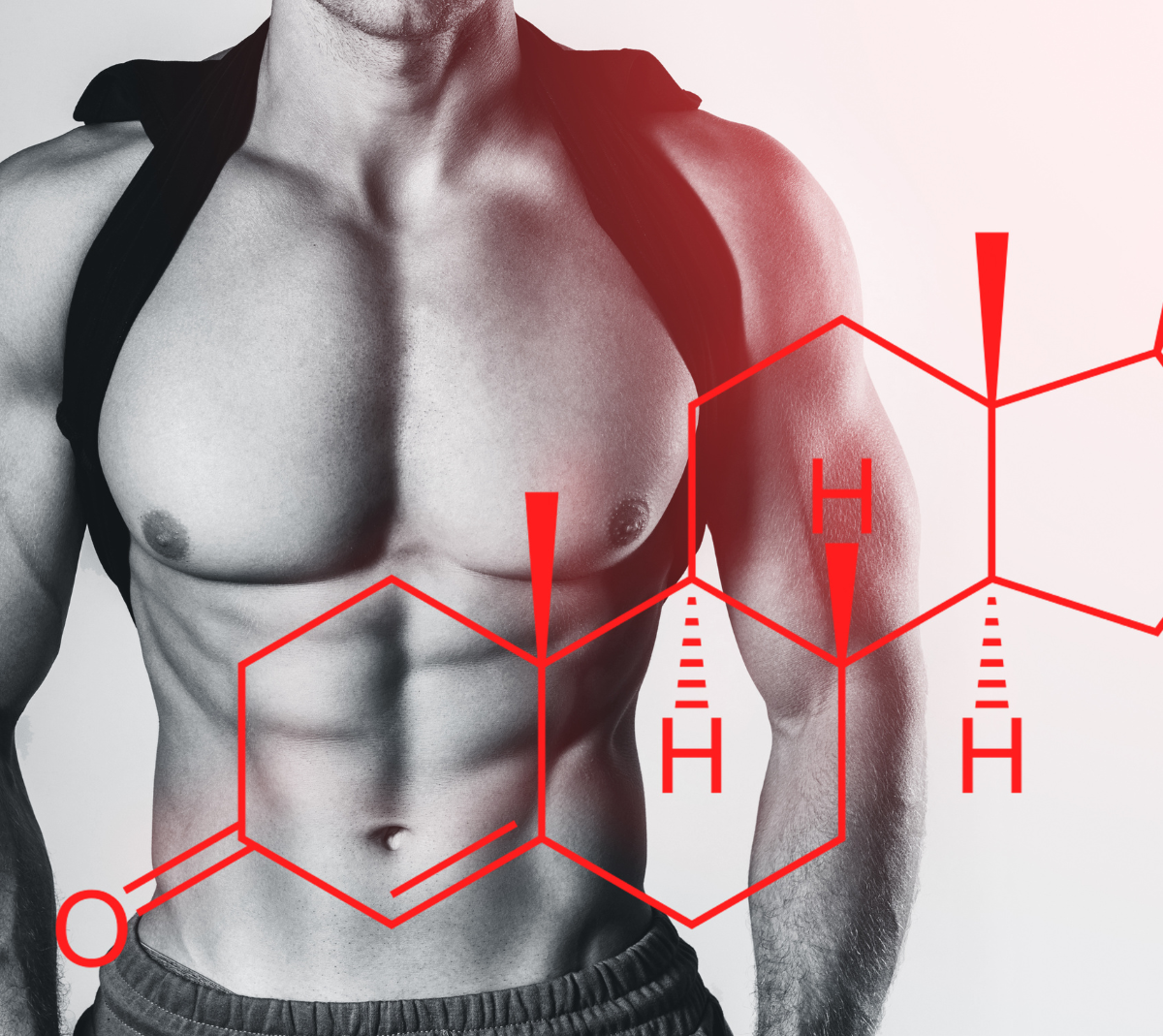
Age-related muscle decline—often referred to as sarcopenia—does not happen overnight. In fact, research shows that men can begin losing 1–2% of muscle mass per year from their late 30s onward if underlying factors are not addressed.
However, this process is not simply about “getting older.” It is driven by a shift in how the body regulates:
- Hormone signalling
- Tissue recovery
- Stress responses
- Blood sugar control
- Protein synthesis
These systems are deeply interconnected. When one becomes dysregulated, others follow.
The Hormonal Ecosystem Behind Muscle Loss
Testosterone: Important, But Only One Piece
Testosterone supports:
- Muscle protein synthesis
- Strength development
- Motivation and energy
After age 40, testosterone levels often decline gradually rather than dramatically. Many men still fall within “normal” lab ranges but feel weaker, recover slower, or gain fat more easily.
This mismatch occurs because muscle health depends on more than testosterone alone. Optimising testosterone without addressing other hormones often leads to disappointing results.
Growth Hormone (HGH): The Missing Recovery Signal
Human Growth Hormone (HGH) plays a central role in:
- Muscle repair after training
- Lean tissue preservation
- Fat metabolism
- Cellular regeneration
Unlike testosterone, HGH secretion is pulsatile and closely tied to deep sleep, insulin levels, and stress.
After 40, HGH production can decline by up to 50%, leading to:
- Slower recovery after workouts
- Reduced lean muscle gains
- Increased body fat accumulation
- Joint stiffness and prolonged soreness
Many men push harder in the gym to compensate—often worsening fatigue instead of improving results.
Cortisol: When Stress Breaks Down Muscle
Cortisol is the body’s primary stress hormone. While essential in short bursts, chronically elevated cortisol has a catabolic (muscle-breaking) effect.
Common contributors to high cortisol after 40 include:
- Poor sleep quality
- High work or emotional stress
- Overtraining with insufficient recovery
- Caloric restriction or crash dieting
Elevated cortisol:
- Breaks down muscle protein
- Blunts testosterone and HGH effects
- Promotes fat storage, especially around the abdomen
In many men, muscle loss is driven not by low anabolic hormones—but by excess catabolic pressure.
Insulin Sensitivity: Nutrients That Never Reach Muscle
Muscle growth requires nutrients—especially amino acids—to enter muscle cells efficiently. This process depends on insulin sensitivity.
As men age, insulin resistance becomes more common, even in those who appear lean or active.
When insulin sensitivity declines:
- Carbohydrates are stored as fat instead of fueling training
- Amino acids fail to stimulate muscle protein synthesis
- Recovery slows despite adequate nutrition
In this context, simply “eating more protein” may not solve the problem.
Common Signs Muscle Optimisation Is Off Balance
Men struggling with muscle health after 40 often report a combination of symptoms, such as:
- Plateaued strength despite training
- Loss of muscle fullness or definition
- Increased abdominal fat
- Prolonged soreness after workouts
- Poor sleep or unrefreshing rest
- Reduced motivation or drive
- Frequent fatigue or burnout
These signs suggest systemic imbalance—not just a single hormone deficiency.
Why Lifestyle Alone Isn’t Always Enough After 40
Nutrition and exercise remain essential foundations. However, aging physiology responds differently to the same inputs.
For example:
- Intense training without recovery raises cortisol
- Intermittent fasting may suppress HGH in stressed individuals
- Low-calorie diets can worsen muscle loss if hormones are not balanced
This is why optimisation after 40 often requires objective data, not assumptions.
The Role of Blood Testing in Muscle Optimisation
A clinic-based approach allows physicians to evaluate how multiple systems interact—rather than focusing on symptoms alone.
Key markers often assessed include:
- Total and free testosterone
- IGF-1 (a reflection of HGH activity)
- Cortisol patterns
- Fasting insulin and glucose
- Inflammatory markers
- Thyroid function
Blood testing helps distinguish between:
- True deficiencies
- Functional imbalances
- Lifestyle-driven stress responses
Most importantly, it prevents unnecessary or inappropriate intervention.
Optimising Muscle Health Safely After 40
Muscle optimisation is not about aggressive intervention—it is about restoring balance.
When guided by clinical insight, strategies may focus on:
- Supporting recovery physiology
- Improving sleep depth and circadian rhythm
- Reducing excess cortisol load
- Enhancing insulin sensitivity
- Aligning training volume with recovery capacity
This approach prioritises long-term muscle preservation, not short-term performance spikes.
Why Physician Oversight Matters
Hormonal systems are tightly regulated. Altering one pathway can affect many others.
Without proper oversight:
- Symptoms may temporarily improve but rebound
- Underlying stress physiology may worsen
- Long-term metabolic health can be compromised
A physician-led model ensures that optimisation is:
- Data-driven
- Individualised
- Continuously monitored
- Adjusted as physiology changes
This is the philosophy behind care at Lyfe Medical Wellness, where muscle health is viewed as part of whole-body optimisation—not isolated hormone replacement.
Reframing Muscle Loss After 40
Struggling to build muscle after 40 is not a personal failure.
It is a biological signal.
One that suggests your body requires a different strategy—one that respects recovery, hormonal interplay, and metabolic health.
By understanding the deeper mechanisms behind muscle decline, men can move beyond frustration and toward sustainable, evidence-based optimisation.
Key Takeaway
Muscle loss after 40 is rarely just about testosterone.
It reflects a complex interaction between HGH, cortisol, insulin sensitivity, sleep, and stress.
Addressing muscle health effectively requires education, testing, and professional guidance, not guesswork.
When the hormonal ecosystem is supported correctly, strength and vitality can be preserved well into later decades—without compromising long-term health.
Contact Information:
- Rawai Clinic : 58/147 Moo 6 T. Rawai, Muang, Phuket, Thailand, 83130
- Laguna Phuket Clinic : 29/99 Moo4, Cherngtalay, Thalang, Phuket 83110
- Phone: +66-94-926-3269 or +66-62-462-3969
- Email: info@lyfemedical.com