
Facial PRP in Phuket, Thailand
Physician-led platelet-rich plasma (PRP) treatment using components from your own blood to support skin quality, texture and natural collagen-related repair processes.
What Is Facial PRP?
Platelet-rich plasma (PRP) is prepared from a small sample of your own blood. The blood is processed to separate and concentrate the platelet-containing plasma, which is then introduced into selected areas of the skin.
Platelets contain growth factors and signaling proteins involved in normal tissue repair and healing responses. In aesthetic medicine, PRP is used to support the skin's natural regenerative processes rather than adding volume or changing facial structure.
Because PRP is prepared from your own blood, it is an autologous treatment. This distinguishes it from treatments that introduce a manufactured filler, neuromodulator or other external biological material.
At Lyfe Medical Wellness, facial PRP is performed following an individual assessment of your skin condition, concerns and treatment goals.
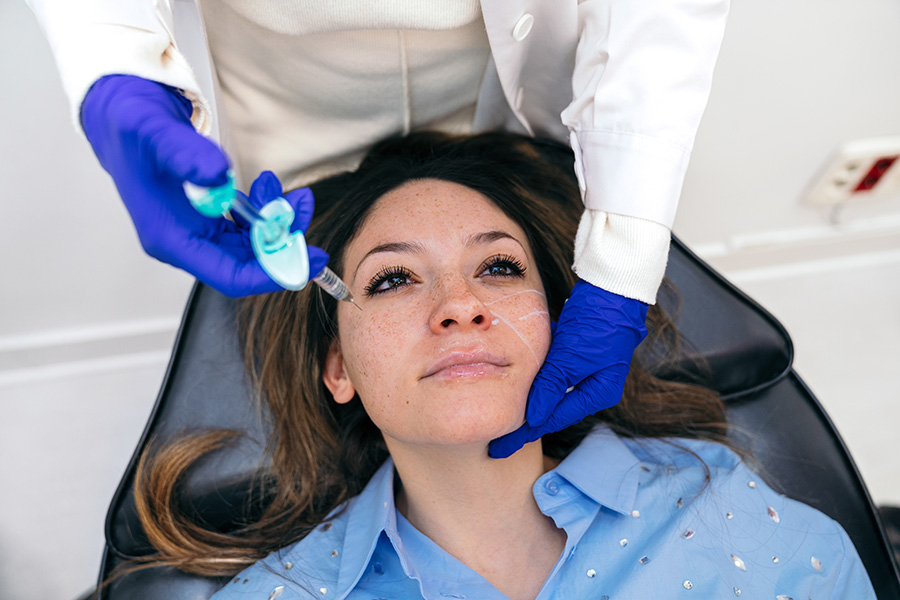
PRP Works With Your Own Biology
PRP does not act like a dermal filler and does not immediately replace lost volume. Its role is to provide a concentrated source of your own platelet-derived biological signals to the treated skin. For this reason, changes tend to develop gradually rather than immediately, and individual response varies.
How Does PRP Work in the Skin?
Platelets are best known for their role in blood clotting, but they also release a range of growth factors and signaling proteins involved in tissue repair. After PRP is prepared and introduced into the skin, activated platelets release these biological signals into the surrounding tissue.
Growth factors associated with platelets include PDGF (platelet-derived growth factor), TGF-β (transforming growth factor beta), and VEGF (vascular endothelial growth factor). These participate in biological processes related to tissue repair, cell communication and extracellular matrix activity.
In aesthetic applications, these mechanisms are why PRP is being used and studied for areas such as skin texture, collagen-related skin quality and selected types of acne scarring.
A Biological Process, Not an Instant Result
PRP is intended to support processes that take place over time. It should therefore be viewed differently from treatments designed to create an immediate structural or volumizing effect.
What Skin Concerns May Facial PRP Support?
Facial PRP may be considered for patients looking to improve overall skin quality through an autologous treatment approach. Depending on the individual, treatment may be considered for:
Skin Texture
PRP may support gradual improvement in the appearance and feel of uneven or rough skin texture.
Fine Lines & Early Skin Ageing
By supporting collagen-related repair processes, PRP may be considered for early changes in skin quality and the appearance of fine lines.
Dull or Tired-Looking Skin
Some patients choose PRP as part of a broader skin-quality program when their skin appears dull or has changed with age or environmental exposure.
Selected Acne Scars
PRP may be considered for certain types of post-acne scarring, sometimes as part of a broader treatment approach depending on the type and depth of scarring.
General Skin Quality
For patients who are not necessarily looking for volume or facial reshaping, PRP can be considered as an option focused primarily on skin condition and regenerative support.
What PRP Does Not Do
Facial PRP is not designed to produce the same effect as Botox, dermal fillers, lifting procedures or treatments targeting significant skin laxity.
What PRP Does Not Do
Facial PRP is not designed to produce the same effect as Botox, dermal fillers, lifting procedures or treatments targeting significant skin laxity.
Understanding your main concern helps determine whether PRP—or another aesthetic treatment—is the more appropriate option.
Is Facial PRP Right for Your Skin Goals?
Facial PRP may be considered by adults interested in an autologous approach to improving skin quality, particularly where the main concerns involve:
Early changes in skin texture or fine lines
Dull or uneven-looking skin
Selected post-acne scars
Gradual age-related changes in skin quality
Preference for a treatment prepared from the patient's own blood
An assessment allows us to understand what you would like to improve and whether PRP is appropriate for that particular concern.
How Is Facial PRP Performed?
Skin Assessment
Before treatment, the areas of concern are reviewed and the treatment approach is discussed with you.
Blood Collection
A small amount of blood is collected from your arm, similar to a routine blood draw.
PRP Preparation
Your blood is processed using a centrifuge to separate and prepare the platelet-rich plasma for treatment.
PRP Application
The prepared PRP is introduced into selected areas of the skin using an appropriate technique, such as targeted superficial injections, depending on the treatment plan.
Post-Treatment Care
Your skin is reviewed after the procedure and you will receive appropriate aftercare guidance before leaving the clinic. Treatment time varies depending on the area and technique used.
What Can You Expect After Facial PRP?
Facial PRP is not intended to create an immediate transformation. Any improvement develops as the skin responds to treatment over time. Some patients may notice changes in skin texture, smoothness or general skin quality following treatment, while the degree and timing of response vary between individuals. The number of sessions recommended also depends on factors such as:
Factors That May Influence Treatment
Some patients may be advised to have a series of treatments, while others may consider an individual or occasional session.
Results Vary
PRP is prepared from the patient's own blood, so the biological composition of the final preparation and individual skin response can vary. Your clinician will discuss what is realistic for your particular skin concern rather than promising a fixed result or treatment timeline.
Facial PRP or Another Aesthetic Treatment?
Different aesthetic treatments address different aspects of facial ageing and skin quality.
The Best Treatment Depends on What You Want to Improve
One treatment is not automatically “better” than another. They address different concerns and work through different mechanisms.
Your assessment should therefore begin with your skin concern rather than a predetermined treatment.
Is Facial PRP Safe?
Because PRP is prepared from your own blood, the risk of an allergic reaction to the PRP itself is generally low. However, PRP remains a medical aesthetic procedure and is not completely risk-free. Temporary reactions following treatment can include:
- Redness
- Mild swelling
- Tenderness or sensitivity
- Bruising at injection or blood-draw sites
As with any procedure involving injections or disruption of the skin, other complications such as infection are possible, although appropriate clinical technique is used to minimise these risks.
Who May Not Be Suitable?
PRP may not be appropriate for everyone. Your medical history and current health should be reviewed before treatment. Additional assessment or postponement may be required in situations involving active skin infection, certain blood or platelet disorders, significant anemia, some medical conditions, or medications that affect bleeding or platelet function. Pregnancy and other individual circumstances should also be discussed before proceeding.
Your Safety Comes Before Treatment
If PRP is not appropriate for your health or does not match the concern you want to address, our medical team will advise you accordingly.
Preparing for Facial PRP
Preparing for Facial PRP
Before your appointment, please inform our medical team about:
- ✓ Current medications and supplements
- ✓ Blood-thinning or antiplatelet medication
- ✓ Known blood or platelet conditions
- ✓ Active skin problems or infection
- ✓ Recent aesthetic procedures
- ✓ Relevant medical conditions
Do not stop prescribed medication unless advised by the clinician who manages that medication.
Specific preparation instructions will be provided according to your individual situation.
After Your Treatment
Temporary redness, swelling, sensitivity or mild bruising can occur following facial PRP.
Your team will provide aftercare instructions based on the technique and area treated. This may include temporarily avoiding irritating skincare products, excessive heat, strenuous activity or other treatments while the skin settles. Sun protection and gentle skincare may also be recommended.
Your Facial PRP Journey at Lyfe Medical Wellness
Consultation & Skin Assessment
We discuss your skin concerns, medical history, previous aesthetic treatments and what you would like to improve.
Treatment Planning
We assess whether facial PRP is appropriate for your concern and explain the proposed treatment technique, expected recovery and realistic outcomes.
PRP Preparation & Treatment
A small blood sample is collected and processed to prepare your PRP, which is then administered to the selected treatment areas.
Recovery
You receive aftercare guidance and information about temporary reactions you may experience as the skin settles.
Review
Where appropriate, your response can be reviewed before deciding whether further sessions or another treatment approach should be considered.
Frequently Asked Questions
Still have questions? Reach out to us—we’re here to help you achieve radiant, youthful skin!
RELATED TREATMENTS
Explore Other Aesthetic Treatments

Not Sure Whether Facial PRP Is Right for Your Skin?
If you are considering PRP but are unsure whether it is appropriate for your skin concern, please feel free to discuss your goals with our medical team. An assessment can help determine whether facial PRP—or another aesthetic treatment—may be better suited to what you would like to address.
Book Your Consultation
Fill the form and we will contact you within 24 hours.