
Thread Lift in Phuket, Thailand
Physician-performed thread lift treatment designed to improve facial support, definition and contour for a naturally refreshed appearance without surgery.
What Is a Thread Lift?
A thread lift is a minimally invasive aesthetic treatment designed to provide support beneath the skin and gently reposition selected areas of facial tissue. It may help improve facial contour, definition and mild to moderate laxity without facial surgery.
Fine, absorbable threads are carefully placed beneath the skin according to your facial anatomy and the areas being treated. Common treatment areas include the cheeks, lower face, jawline, brow and neck.
The threads provide support to the treated tissues and are gradually broken down and absorbed by the body over time. Their placement also creates a natural tissue response that may contribute to collagen formation around the treated area.
Thread lifting is generally most appropriate for mild to moderate facial laxity. It does not provide the same degree of correction as a surgical facelift, particularly where there is significant skin or tissue laxity.
At Lyfe Medical Wellness, treatment begins with a facial assessment to understand your anatomy, degree of laxity and aesthetic concerns before determining whether a thread lift is appropriate for you.
What Are the Threads Made From?
The threads used for treatment are made from PDO (polydioxanone), an absorbable material that gradually breaks down within the body. The type, number and placement of threads are selected according to the area being treated and your individual facial anatomy.
How Does a Thread Lift Work?
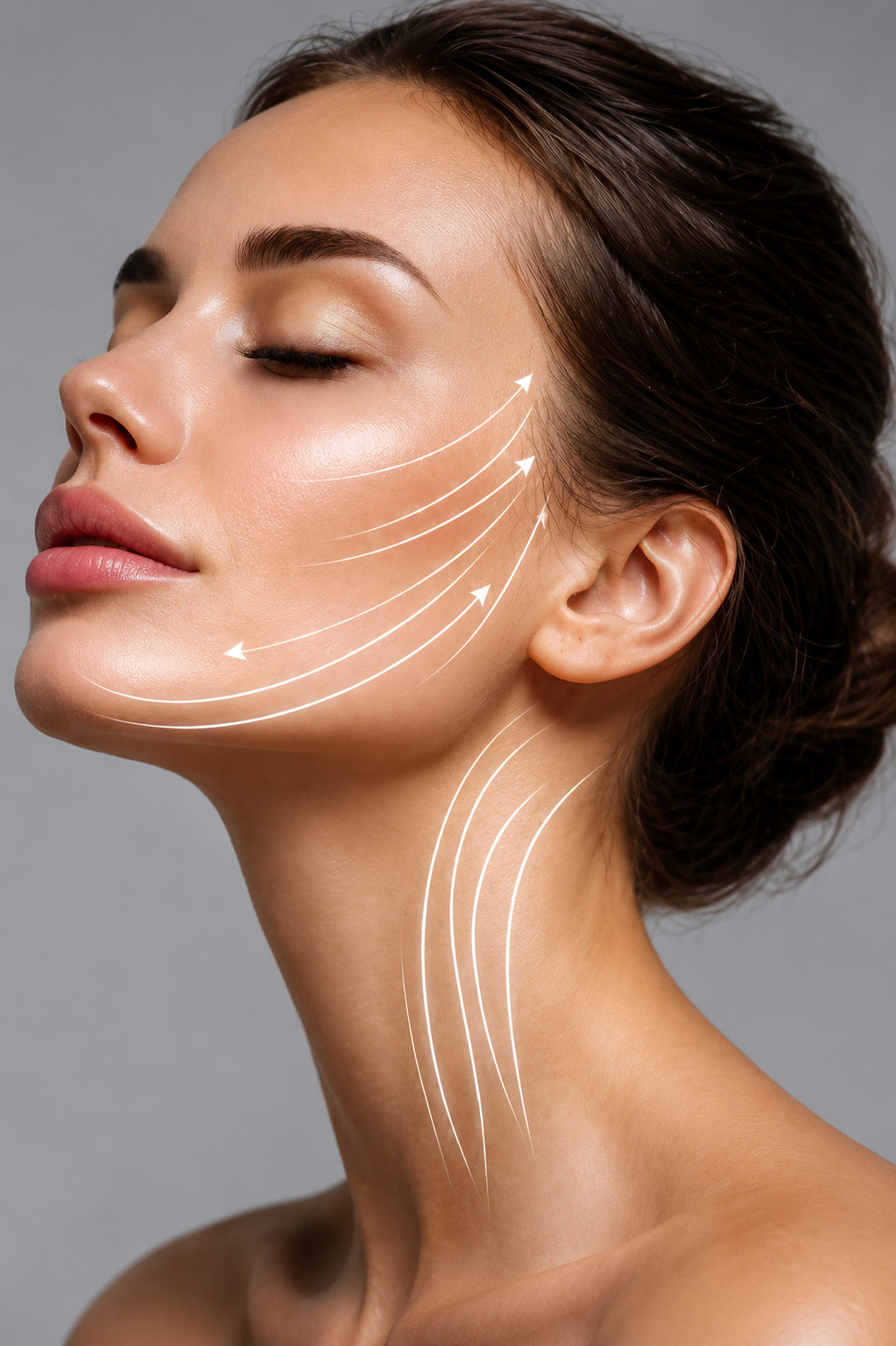
Thread lifting works primarily through mechanical support and repositioning of tissue. Specially designed threads are inserted beneath the skin along pathways planned according to your facial anatomy. Depending on the thread selected, small structures along the thread can engage the surrounding tissue, allowing the physician to reposition it in a controlled direction. There are two main aspects to the treatment:
Immediate Mechanical Support
Once positioned, the threads provide support beneath the skin and may create an immediate change in the contour of the treated area.
Tissue Response Over Time
As the threads gradually dissolve, the surrounding tissue undergoes a normal healing response. Collagen formation may occur around the thread pathway and can contribute to ongoing support and skin quality.
Threads Do Not Replace Lost Facial Volume
Thread lifting primarily addresses tissue position and support. It does not replace facial volume in the same way as dermal fillers, and it cannot remove significant excess skin in the way surgery can.
That last section is particularly useful educationally. It helps clients understand what the treatment actually does rather than assuming every sign of facial ageing can be corrected with threads.
What Concerns May Thread Lifting Address?
Thread lifting may be considered for selected patients experiencing early to moderate changes in facial tissue position or definition.
Lower Face & Jawline
Threads may be positioned to support tissues around the lower face where early jowling or reduced jawline definition has developed.
Cheeks & Midface
For selected patients with mild tissue descent through the midface, thread placement may provide additional support and repositioning.
Facial Contour
Treatment can be planned according to facial proportions where the goal is to improve definition or support existing facial contours rather than add significant volume.
Brow & Temple Area
Selected thread techniques may be used to provide subtle support to the lateral brow or temple area.
Neck
Thread lifting may be considered for selected patients with mild laxity around the lower face and upper neck.
The Treatment Area Depends on Your Anatomy
Not every area of facial laxity is suitable for thread lifting. During consultation, your physician will assess whether the concern is primarily related to tissue descent, volume loss, skin laxity, muscle activity, or a combination of factors before recommending treatment.
Who May Be Suitable for a Thread Lift?
Thread lifting may be considered for adults with mild to moderate facial laxity who would like to explore a minimally invasive treatment rather than surgical correction. It may be relevant for patients concerned about:
Early jowling or reduced jawline definition
Mild cheek or midface descent
Early facial tissue laxity
Changes in facial contour
Mild brow or neck laxity
However, thread lifting is not appropriate for every patient.
Patients with significant skin excess, advanced tissue laxity or concerns primarily caused by volume loss or skin quality may require a different approach.
Sometimes Another Treatment Is More Appropriate
A consultation does not automatically lead to thread lifting. Depending on your anatomy and concerns, your physician may discuss another aesthetic treatment — or explain that thread lifting is unlikely to provide the type of change you are looking for.
How Is a Thread Lift Planned?
Thread lifting should not follow the same placement pattern or number of threads for every patient. Before treatment, your physician assesses factors such as:
Facial anatomy and proportions
Degree and location of tissue laxity
Skin quality and thickness
Areas of volume loss
Facial movement
Previous aesthetic treatments
Medical history
Your concerns and expected outcome
Based on this assessment, the physician determines whether threads are appropriate and, if so, the treatment areas, thread placement and number of threads required.
Natural Facial Proportions Come First
The aim is not to create a predetermined facial shape or apply the maximum possible lift. Treatment planning should respect your existing anatomy and focus on an appropriate degree of correction for your individual face.
What Happens During a Thread Lift?
Facial Assessment & Planning
Your physician assesses your facial structure and marks the proposed thread pathways according to the treatment plan.
Preparation & Local Anesthetic
The treatment area is prepared and local anesthetic is administered to help minimize discomfort during thread placement.
Thread Placement
The threads are carefully introduced beneath the skin using the appropriate insertion technique and positioned according to the planned treatment area.
Adjustment
The physician assesses the tissue position and makes appropriate adjustments before completing the procedure.
Aftercare
You can normally leave the clinic following treatment. Our medical team will explain what to expect during recovery and provide aftercare instructions. Treatment time varies depending on the number of areas and threads required.
What Results Can You Expect?
An initial change in tissue position may be visible after thread placement. However, the appearance immediately after treatment is not necessarily the final result, as temporary swelling, tightness or surface irregularity may be present. The treated tissues generally settle gradually during the recovery period. The degree of improvement and how long it remains visible varies between individuals and can be influenced by factors including:
Thread Lifting Has Limitations
Thread lifting generally produces a more modest degree of correction than facial surgery and cannot stop the normal ageing process. Your physician should explain what degree of change may reasonably be expected from treatment based on your individual anatomy before you decide whether to proceed.
What Is Recovery Like After a Thread Lift?
Recovery varies between patients and according to the extent of treatment. Temporary effects can include swelling, bruising, tenderness, tightness or minor skin irregularity around the treated areas. These generally improve as healing progresses, although the duration varies between individuals. Your medical team will provide specific aftercare instructions. These may include temporarily avoiding:
These may include temporarily avoiding:
Plan Around Important Events
Because swelling or bruising can occur, avoid scheduling thread lifting immediately before an important social event, photography session or other occasion where temporary changes in appearance could be inconvenient.
Is Thread Lifting Safe?
Thread lifting is a minimally invasive medical aesthetic procedure, but like any procedure involving placement of material beneath the skin, it has potential side effects and complications.
Expected temporary effects may include swelling, bruising, tenderness, tightness and temporary surface irregularity.
Other possible complications can include infection, asymmetry, persistent irregularity, thread visibility or palpability, thread extrusion or migration, and other treatment-related complications. Suitability should therefore be assessed before treatment.
Thread lifting may not be appropriate in situations such as active infection or inflammation in the treatment area, pregnancy, certain bleeding or healing disorders, or other medical conditions that may affect treatment safety. Individual circumstances should be reviewed by your physician.
Understanding the Risks Is Part of the Consultation
Before treatment, your physician will explain the expected recovery, potential side effects, relevant risks and limitations so you can make an informed decision about whether you would like to proceed.
Your Thread Lift Journey at Lyfe Medical Wellness
Aesthetic Consultation
Discuss the areas that concern you, previous aesthetic treatments, medical history and what type of change you are hoping to achieve.
Facial Assessment
Your physician assesses your facial anatomy, tissue laxity, volume distribution and skin condition to determine whether thread lifting is appropriate.
Treatment Planning
If thread lifting is suitable, the physician discusses the proposed treatment areas, thread placement, expected degree of correction, recovery and relevant risks.
Treatment
The procedure is performed in our clinical setting using local anaesthetic and an individually planned thread-placement approach.
Recovery & Follow-Up
Our team provides aftercare guidance and reviews your recovery where appropriate. If you experience anything unexpected following treatment, you should contact the clinic for medical advice.
Frequently Asked Questions
RELATED TREATMENTS
Explore Other Aesthetic Treatments

Not Sure Whether Thread Lifting Is Right for You?
If you are concerned about changes in facial contour, early jowling or skin laxity and are unsure which aesthetic treatment may be appropriate, please feel free to discuss your concerns with our medical team. A facial assessment can help determine whether thread lifting — or another treatment approach — is better suited to your anatomy and goals.
Book Your Consultation
Fill the form and we will contact you within 24 hours.