
Stem Cell Therapy in Phuket, Thailand
Physician-led mesenchymal stem cell (MSC) therapy, individually assessed and planned around your health, medical needs and treatment goals.
What Is Stem Cell Therapy?
Stem cells are cells with the ability to self-renew and, under appropriate biological conditions, develop into different specialized cell types.
Within regenerative medicine, mesenchymal stem cells (MSCs) are being studied for their potential role in cellular signaling, immune regulation and processes involved in tissue repair.
At Lyfe Medical Wellness, stem cell therapy may involve umbilical cord-derived mesenchymal stem cells (UC-MSCs) or autologous bone marrow-derived MSCs, depending on the treatment being considered and the individual patient.
Stem cell therapy is not approached as a standard treatment suitable for everyone. Before treatment is considered, our physician reviews the patient's medical history, current health, treatment objectives and relevant investigations to determine whether an MSC-based treatment may be appropriate.

What Are Mesenchymal Stem Cells?
Mesenchymal stem cells are multipotent stromal cells that can be isolated from several types of human tissue, including bone marrow, adipose tissue and perinatal tissues such as the umbilical cord.
Much of the scientific interest in MSCs relates not simply to their ability to differentiate into other cell types, but also to the biological signals they release and their interaction with surrounding cells and tissues.
Research into these mechanisms continues, and their clinical relevance varies according to the condition being investigated.
How MSC Therapy Is Thought to Work
MSC therapy is more complex than introducing cells that simply replace damaged tissue. Current research is examining several mechanisms through which MSCs may interact with the body.
Cellular Signaling
MSCs release signaling molecules, including cytokines, growth factors and extracellular vesicles, which can influence communication between cells.
Immune & Inflammatory Signaling
MSCs have demonstrated immunomodulatory properties in laboratory and clinical research. How relevant these effects are depends on the clinical condition and treatment context.
Tissue Repair Environment
Signals released by MSCs are being investigated for their potential role in biological processes associated with tissue maintenance and repair.
Paracrine Effects
Many of the effects being investigated in MSC therapy are believed to occur through paracrine signaling — communication between cells through biologically active molecules — rather than through the MSCs permanently replacing existing tissue.
An Evolving Area of Medicine
MSC research continues to develop. The biological mechanisms observed in laboratory research do not automatically translate into a proven clinical benefit for every condition. Treatment decisions should therefore consider the available evidence, individual circumstances and areas where uncertainty remains.
Allogeneic vs Autologous MSCs
Mesenchymal stem cells can be obtained from different sources. The appropriate source depends on the treatment being considered, patient factors and physician assessment.
Umbilical Cord-Derived MSCs
Umbilical cord MSCs are allogeneic, meaning that the cells originate from a screened donor rather than from the patient receiving treatment.
The cells are derived from donated umbilical cord tissue following birth and are processed and expanded under controlled laboratory conditions before clinical use.
Where UC-MSCs are considered, donor screening, cell characterization, manufacturing standards and quality testing are important parts of evaluating the cell product.
Autologous Bone Marrow-Derived MSCs
Autologous MSCs are obtained from the patient's own tissue.
At Lyfe Medical Wellness, bone marrow-derived MSCs may be considered for selected patients where an autologous treatment pathway is appropriate.
This approach involves obtaining the patient's own biological material before the cells are prepared for subsequent treatment.
Which Cell Source Is Better?
There is no single cell source that is automatically the best choice for every patient or clinical situation. The decision may depend on factors including:
Your physician will discuss the relevant differences when more than one approach may be considered.
Personalised Treatment Approach
At Lyfe Medical Wellness, we offer both allogeneic and autologous MSC therapy. Following a comprehensive medical assessment, your physician will discuss the available options and recommend the most appropriate approach based on your clinical condition, medical history and individual circumstances.
How Stem Cell Therapy May Be Used at Lyfe Medical Wellness
Stem cell therapy can be considered in different clinical contexts. The route of administration and treatment plan depend on the reason treatment is being explored.
At Lyfe Medical Wellness, our principal MSC programs include:
Stem Cell Therapy for Rejuvenation & Healthy Ageing
Intravenous MSC therapy may be considered within a broader physician-led regenerative medicine program for individuals interested in healthy ageing, recovery and health optimization.
This should not be interpreted as a treatment proven to reverse ageing or prevent age-related disease. The physician will discuss the rationale, available evidence and limitations relevant to the individual program.
Stem Cell Therapy for Joint Health
MSC therapy may also be considered for selected musculoskeletal conditions, including certain patients with joint degeneration or osteoarthritis.
Treatment may involve targeted administration using anatomical landmarks to the affected joint following appropriate assessment and review of imaging where required.
The suitability of MSC treatment depends on factors including the diagnosis, severity of joint changes, symptoms, previous treatments and overall health.
How Is Stem Cell Therapy Personalized?
There is no single MSC protocol appropriate for every patient.
Before recommending treatment, your physician considers factors such as:
If stem cell therapy is considered appropriate, the physician will discuss the proposed cell source, route of administration, treatment plan and whether any additional treatment is clinically relevant.
Additional therapies are not automatically required simply because MSC therapy is being performed.
Why Cell Quality Matters
Not all stem cell preparations are the same.
Cell source, donor screening, laboratory processing, cell characterization, storage and transportation can all influence the quality of a cell-based product.
For UC-MSC therapy, the treatment batch should be supported by appropriate laboratory documentation. At Lyfe Medical Wellness, the Certificate of Analysis (COA) accompanying the cell preparation is reviewed as part of the treatment process.
Depending on the product and laboratory, quality information may include:
Cell Identity
Assessment of characteristic MSC surface markers helps confirm the cellular population being supplied.
Cell Viability
Viability indicates the proportion of cells considered viable at the time of laboratory assessment.
Microbiological Testing
Testing is performed to assess for microbial contamination according to the laboratory's quality-control procedures.
Endotoxin Testing
Endotoxin assessment forms part of evaluating the microbiological quality of injectable biological products.
What Does the Evidence Tell Us About MSC Therapy?
Mesenchymal stem cells are an active area of biomedical and clinical research.
Research has investigated MSCs across a wide range of applications, including musculoskeletal conditions, inflammatory and immune-related processes, tissue repair and other areas of regenerative medicine.
However, the strength of evidence is not the same for every application. Some uses have been investigated in clinical studies, while others remain experimental or have limited evidence regarding effectiveness, ideal dosage, treatment frequency or long-term outcomes.
For this reason, treatment should not be presented as a guaranteed way to regenerate tissue, reverse ageing, prevent disease or replace established medical treatment.
At Lyfe Medical Wellness, our responsibility is to discuss:
• What evidence is currently available
• What remains uncertain
• Potential risks and limitations
• Alternative treatment options where relevant
• What may reasonably be expected for the individual patient
This allows our patients to make an informed decision about whether treatment is appropriate for their condition.
Is Stem Cell Therapy Safe?
The safety of MSC therapy depends on several factors, including the cell source, manufacturing and quality controls, route of administration, patient's health and clinical setting in which treatment is provided.
Stem cell therapy is not suitable for everyone. Further investigation, specialist clearance or an alternative treatment approach may be required for individuals with certain medical conditions.
These may include circumstances such as:
• Certain active or recent cancers
• Significant immune or hematological conditions
• Certain medications affecting immune function
• Pregnancy or breastfeeding
• Significant uncontrolled medical conditions
• Other circumstances identified during physician assessment
Your physician will review your medical history, medications, relevant investigations and individual risk factors before deciding whether treatment should be considered.
Understanding Potential Risks
As with any medical treatment, MSC therapy may involve risks and unwanted effects.
These vary depending on the cell preparation, route of administration and individual patient.
Your physician will explain the risks relevant to the proposed treatment before you decide whether to proceed.
Stem Cell Therapy Is a Medical Decision
Being interested in regenerative medicine does not necessarily mean that stem cell therapy is the appropriate treatment. In some cases, your physician may recommend another approach or advise against treatment.
How Is Stem Cell Therapy Administered?
The method of administration depends on the clinical purpose of treatment.
Intravenous Administration
For selected systemic regenerative medicine programs, MSCs may be administered through an intravenous infusion.
Treatment is performed in a clinical environment with medical supervision.
Joint Administration
For selected musculoskeletal conditions, MSCs may be administered locally to the affected joint using anatomical landmarks.
Appropriate clinical assessment and imaging may be required before treatment is recommended.
What Happens After Treatment?
Your medical team will provide aftercare guidance appropriate to the treatment you have received.
Follow-up focuses on your general wellbeing, treatment response and any symptoms or concerns following treatment. The timing of follow-up depends on the type of treatment and individual clinical circumstances.
There is no universal timeline for response to MSC therapy, and improvement cannot be guaranteed. Any changes should be assessed according to the condition being treated and appropriate clinical measures rather than a predetermined treatment timeline.
Your Stem Cell Therapy Journey at Lyfe Medical Wellness
Physician Consultation
Discuss your medical history, current health, previous treatments, medications and reasons for considering regenerative medicine.
Assessment & Investigation
Your physician reviews relevant medical information and recommends laboratory testing, imaging or additional investigation where appropriate.
Treatment Discussion
Your physician explains whether stem cell therapy may be appropriate, the proposed cell source and treatment approach, available evidence, potential risks and limitations, and alternative options where relevant.
Individual Treatment Planning
If treatment is considered appropriate and you choose to proceed, your program is planned according to your individual clinical circumstances. For treatments requiring cell preparation, our team will coordinate the appropriate arrangements before your treatment date.
Treatment
Treatment is provided at Lyfe Medical Wellness in Phuket with medical supervision and appropriate clinical monitoring.
Follow-Up
Follow-up allows your physician to review your response, address any concerns and determine whether further assessment or treatment should be considered.
Planning Stem Cell Therapy in Phuket
We regularly assist international patients who are considering regenerative medicine while visiting Phuket. Before arranging travel specifically for treatment, we recommend contacting our team in advance so that we can understand the treatment you are considering and advise whether physician assessment or medical information is required before your visit.
How Long Should I Stay in Phuket?
The recommended stay depends on the treatment being considered, whether investigations are required and whether your program involves a single treatment or several therapies.
For a straightforward single-session program, a short stay may be sufficient. More comprehensive regenerative medicine programs may require additional time for assessment, treatment and follow-up.
Our team can advise on the appropriate schedule once your proposed program has been reviewed.
Should I Send My Medical Records Before Travelling?
Where available, recent medical records can be helpful. Depending on the reason you are considering treatment, useful information may include:
- Recent blood-test results
- Current medication list
- Relevant medical reports
- MRI or X-ray reports for musculoskeletal conditions
- Previous treatment history
If further assessment is required, our team can explain what should be arranged before or during your visit.
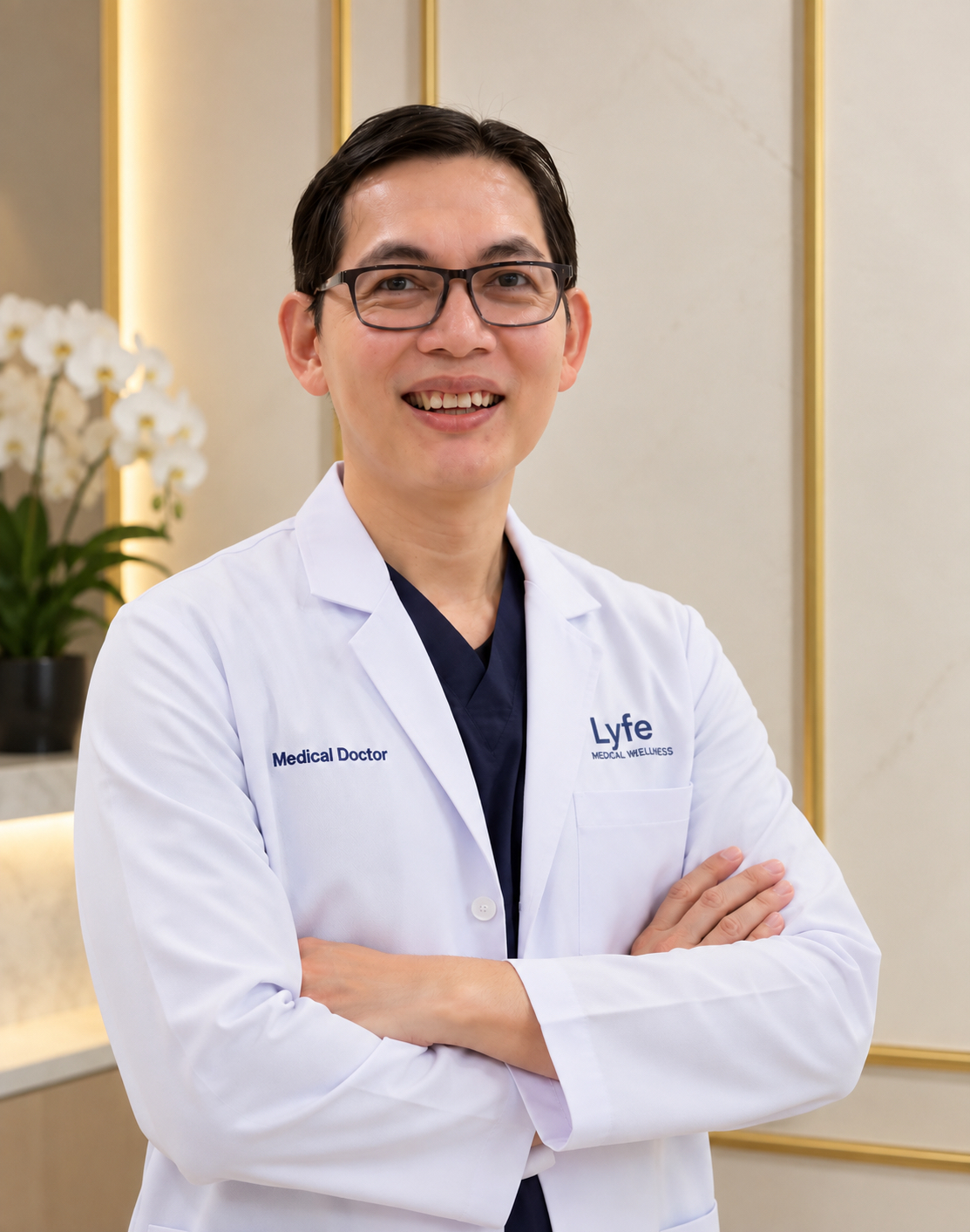
“Stem cell therapy is a medical decision — not a wellness product. Every patient who comes to us deserves a physician’s assessment, not a menu of pre-packaged treatments.”
At Lyfe Medical Wellness, we believe the most important thing we can offer a patient is honest, personalised medical guidance — before any treatment begins.
Stem Cell Therapy in Phuket — Frequently Asked Questions
Explore Related Regenerative Medicine Services
Exosome Therapy
Physician-led exosome therapy considered within individualized regenerative medicine programs, depending on the treatment objective and clinical assessment.
Explore Exosome Therapy →PRP Therapy
Autologous platelet-rich plasma prepared from the patient's own blood and used in selected musculoskeletal and aesthetic applications.
Explore PRP Therapy →NAD+ Therapy
Intravenous NAD+ therapy used within personalized programs focused on cellular energy metabolism, recovery and healthy ageing.
Explore NAD+ Therapy →Peptide Therapy
Physician-supervised peptide programs considered according to individual health objectives, clinical assessment and the specific peptide being evaluated.
Explore Peptide Therapy →Choosing the Right Regenerative Treatment
The most appropriate regenerative treatment depends on your medical history, clinical findings and treatment goals. Following a comprehensive assessment, your physician will discuss whether stem cell therapy or another regenerative treatment may be suitable for your individual circumstances, based on the current clinical evidence and your specific needs.
Treatment suitability and individual responses vary. No specific treatment outcome can be guaranteed.

Considering Stem Cell Therapy?
If you are exploring stem cell therapy and would like to understand whether it may be appropriate for you, our medical team can help you understand the available options.
A physician consultation allows us to review your medical history and treatment goals, discuss the relevant evidence and limitations, and determine whether further assessment or a particular regenerative medicine approach may be appropriate.
Treatment suitability and individual response vary. No specific treatment outcome can be guaranteed.
Book Your Consultation
Fill the form and we will contact you within 24 hours.